
Cameraman Videographer Career Guide and Certified Skills
 Cinday Orley
•
March 17, 2026
Cinday Orley
•
March 17, 2026A cameraman videographer who takes a leading role in the visual narratives in film, television, documentaries, live events and digital media. Although people tend to create attention to directors or actors, the professional who handles the camera is very important in deciding the quality and emotional attachment of any work. This position is artistic framing, technical accuracy and on-set cooperation to transform creative ideas into persuasive moving images. Knowledge of professional roles, skills needed and future career opportunities enable a new professional to judge whether it is a visually stimulating career path suited to his or her long term careers in the new production industry of Canada.
Table of Contents
Core Responsibilities Behind the Camera
Visual Composition and Storytelling
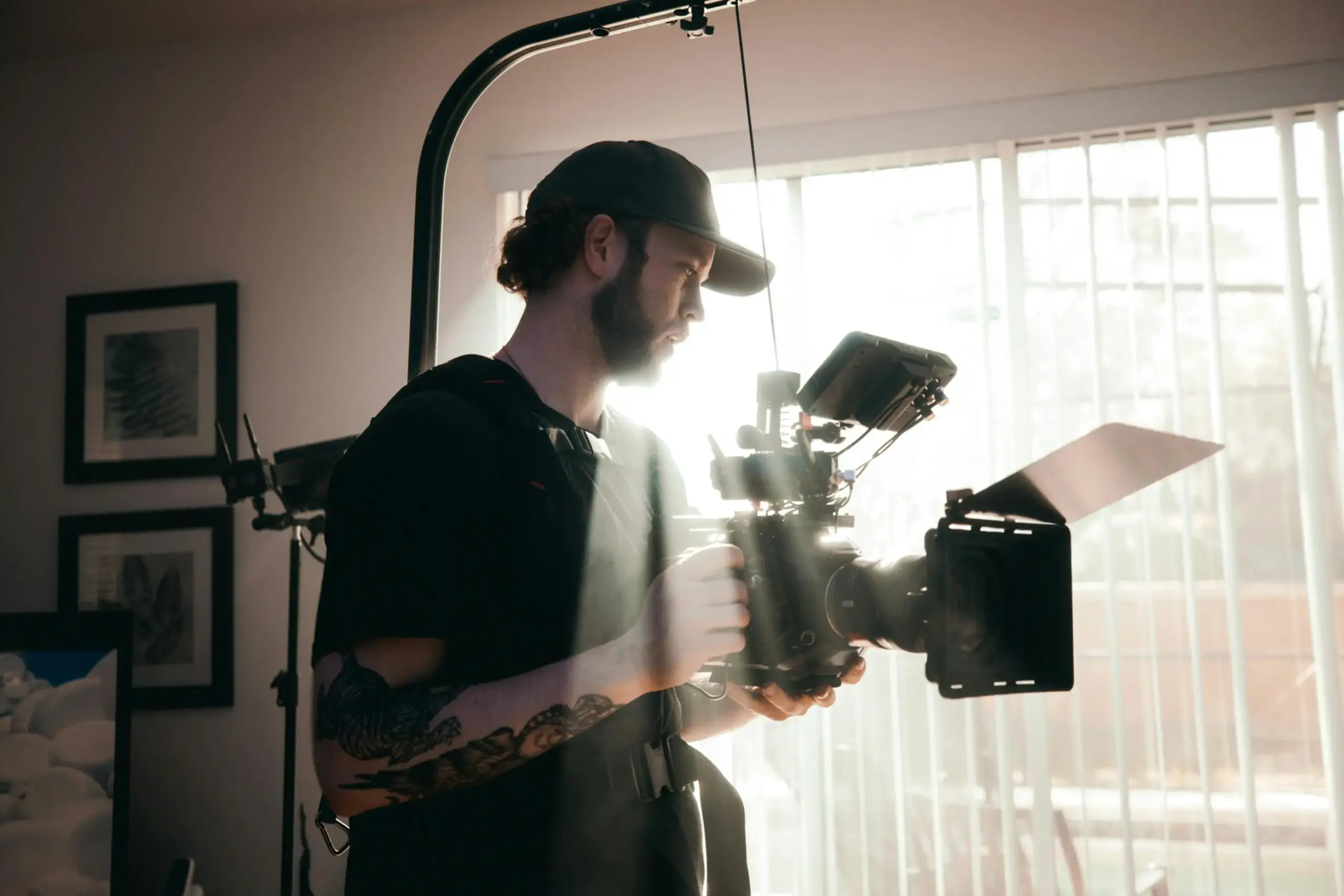
A videographer cameraman is in the middle of the profession and can decide on the way scenes are framed, lighted and how they should be structured. The selection of lenses, camera movement, and the arrangement of shots will have a direct impact on the perception of the viewer and the emotional coloring. Well-developed visual literacy enables the practitioners to facilitate narrative pacing and stay technologically clear.
Due to the variety of settings in production, one needs flexibility. The camera operator has to adapt within seconds to the change in lighting, movement and time restrictions whether recording a scripted drama, documentary film, or even live events without interfering with the image quality.
Technical Operation and Equipment Mastery
In addition to being artistically well educated, the position needs elaborate expertise with the cameras, stabilization, lenses, and recording formats. The workflows today together with data management, color profiles and coordination with post production teams are also involved. New workers can start as an assistant camera operator, in which they are taught the workings of equipment, focus, and preparation and come under the supervision of a full-shooting camera operator.
Career Structure in Film and Video Production
Entry-Level Pathways and Early Experience
Most of the professionals start by assisting the key experienced crew members, as time goes by they gain technical confidence and understanding of production. Helping in equipment assembly, changing lenses, switching of shots eases newcomers to learn actual processes. With time, the same responsibilities will turn into a chance to shoot independently and camera operator jobs in various branches of production.
Expanding Opportunities Across Media
Increased use of streaming platforms and corporate media, as well as online content, has increased the need of talentful visual experts. The current kind of video camera work is the one that is carried out by a videographer or cameraman, which can be applied in commercials, branded content, documentaries, or social media content. This diversification makes it more stable than the conventional single-industry careers.
Professionals seeking collaboration opportunities or visibility among active productions can explore registered crew networks on our platform. This environment helps connect skilled crew with evolving production needs in a practical and industry-focused way.
Essential Skills for Long-Term Success
Technical Precision and Adaptability
An effective camera operator must be able to maintain a good level of consistency in the exposure, focus precision and constant movement in the changing circumstances. Quick decision making is essential and this is provided mainly when there is live filming or when it is unpredictable. Both handheld and stabilized shooting mastery broadens the handheld shooting to diversecamera operator jobs industry.
Communication and Collaboration
The Camerawomen are in close collaboration with the directors, producers, and lighting and sound departments. Effective communication will make visual intent the same as the general production objectives. The work experience as the assistant camera operator usually intensifies the understanding of teamwork and, in the future, makes people ready to carry out the leadership roles.
Understanding Broadcast and Field Production
There are also those who specialize in electronic news coverage or fast-turnaround coverage. Under such circumstances, the cameraman videographer, needs to find a compromise between speed and clarity of the story and, in most cases, it has to act alone in a dynamic setting.
Work Environments and Industry Demand
Film, Television, and Commercial Production
The classical scripted production is a significant source of employment where more specific collaboration and cinematography are necessary. This environment is characterized by large crews and structured workflows and provides regular opportunities to ambitious professionals involved in camera operator operations.
Documentary, Events, and Digital Media
Documentaries made independently, live events, and web-based productions do offer further career freedom. Such areas usually involve multitasking of the cameraman videographer so that he is the one to control sound, lighting, and framing. This kind of flexibility enhances long term employability in the face of an evolving media environment.
Professional Growth and Specialization
Advancing Into Cinematography
Certain camera professionals move either to cinematography or visual director jobs with experience. This development entails more creative control and cooperation in the field of lighting design, color tone and visual narrative approach.
Building Reputation and Stability
Stability, ability to work dependably, and good visual work are factors that enable individual professionals to get repeated work. Sustentaciously, reputation can serve as one of the main sources of entry into bigger-budget productions and the employment in specialized camera operator jobs in competitive markets.
Conclusion
The profession of a cameraman videographer is an essential part of the contemporary visual narrative, a synthesis of visual acuity with technical precision and functionality in a wide range of production areas. Since the first encounter as an assistant camera operator to the progressive potentials of film, television and digital media, this is career advancement that provides creative gratification, as well as the varying needs in the industry. With technology and distribution platforms ever-growing, the expertise of camera professionals will still be required in the process of defining concepts into the form of effective visual experiences.
FAQs
What does a camera operator do on set?
The camera operator controls the frame, focus, expose, and move the shots about to capture the scenes on the visual plan of the production.
How do you start as an assistant camera operator?
A majority of the novices are trained/interned or work as low-level crew where technical skills and on-set training are acquired.
Are there many camera operator jobs available today?
Yes. The streaming and online media development and the commercial production keep on producing new camera operator jobs all over the world.
What is meant by operator camera?
The term operator camera is a grammatical variation search term that describes a camera operator position in the film or video industry.
What is an Eng videographer?
An eng videographer typically works in electronic news gathering, filming fast-turnaround footage for broadcast or digital reporting.
Cinday Orley
About Me
I am a senior software engineer skilled in developing enterprise-grade software solutions using Microsoft technologies. With a decade of experience, I specialize in delivering high-quality software products that fulfill my clients' specific needs. Throughout my professional journey, I have contributed to a diverse range of greenfield and brownfield software development projects in both corporate and freelance environments, providing profound insights into efficient, effective, and scalable software solutions.
Currently, I'm open to work and employment opportunities.
I specialize in various areas, including, but not limited to:Designing scalable applications in C# .NET
Confidently shipping well-architected, production-ready apps using N-Layer Architecture and Clean Architecture. While Clean Architecture remains very pure and adheres strictly to its principles, I always tend to take a pragmatic approach towards it.
Applying OOP principles such as SOLID.
Implementing design patterns like the Repository Pattern, Unit of Work Pattern, CQRS Pattern, and Mediator Pattern to effectively address cross-cutting concerns.
Applying best practices to EF Core and achieving incredible query performance with Dapper.
Developing Interactive, Rich Client-Side, and Progressive Web Applications Using Razor, Angular, React.
Skillfully implementing Structured Logging through Serilog.
Proficiently managing source control and project through Azure DevOps, GitHub, BitBucket.What I do?
🔭 Writing: C# | ASP.NET | ASP.NET MVC | ASP.NET Core | .NET 7.0 | Web API | Razor | Angular | React | Clean Architecture | CQRS | MSSQL | Azure
💬 Ask Me About: .NET, RESTful APIs, MSSQL, Razor, Angular, React, CQRS, Software Architecture, Design Patterns, Azure.
🌱 I'm currently learning many things, I believe that everyday is a learning opportunity.
👯 Collaboration: I'm enthusiastic about meaningful collaborations and contributions. If you have an interesting project in mind or require assistance with your ongoing efforts, don't hesitate to contact me. Let's work together to achieve our goals.
👯 I'm currently open for work and employment opportunities (remote and relocation)
Programming is a continuous learning process. The more we practice, the more we learn.Tools & Technologies
Previous Article: Camera Rentals for Film and Video Production
Next Article: Videographer For Rent: Hiring Guide and Approved Skills